
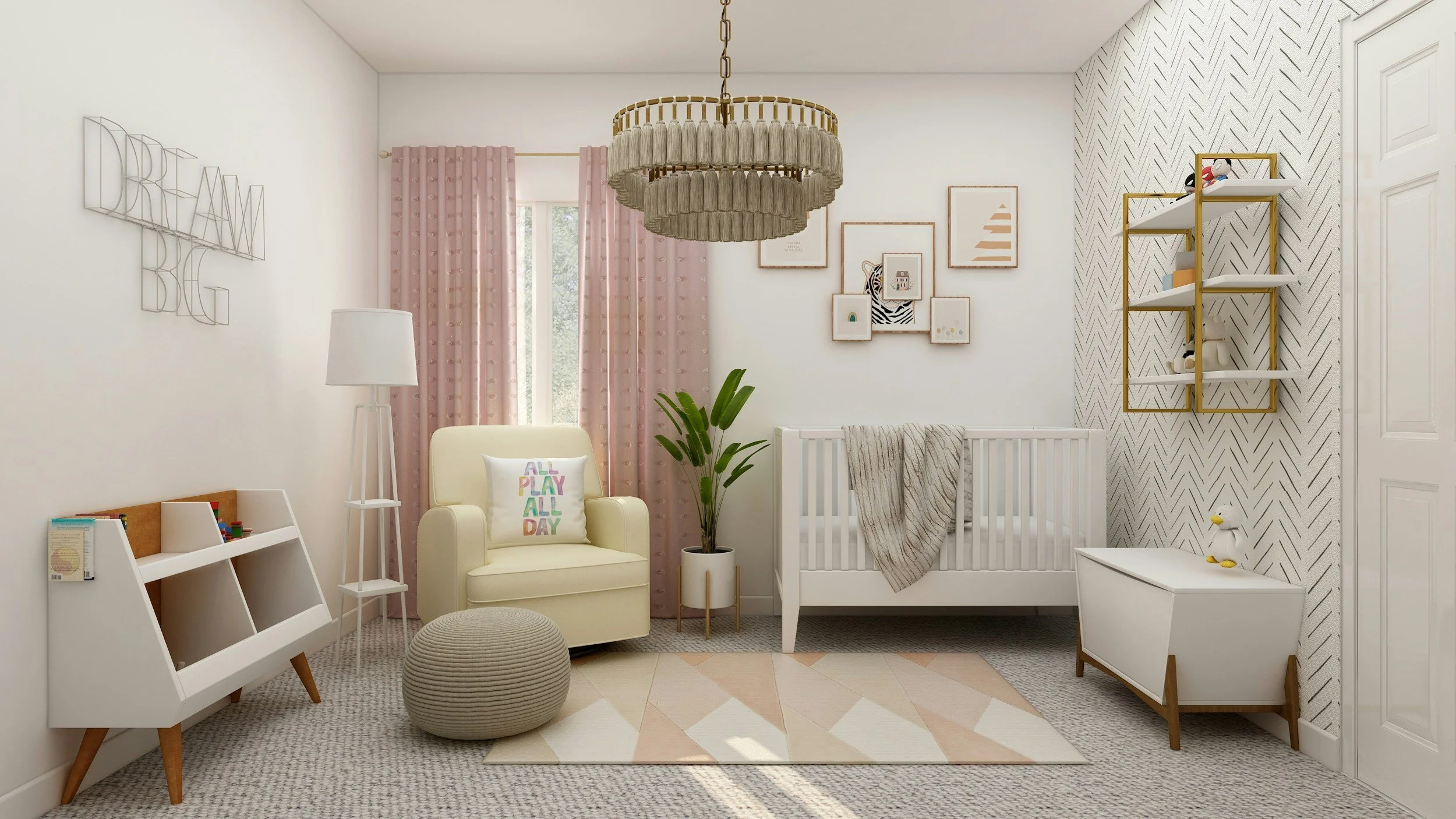
How I'm Prepping for Baby Number Two Sustainably (Without Losing My Mind or My Budget)
The most sustainable baby gear is the kind someone else already bought. Here's exactly where I shop, what I skip, and what I'd do differently with baby number two.
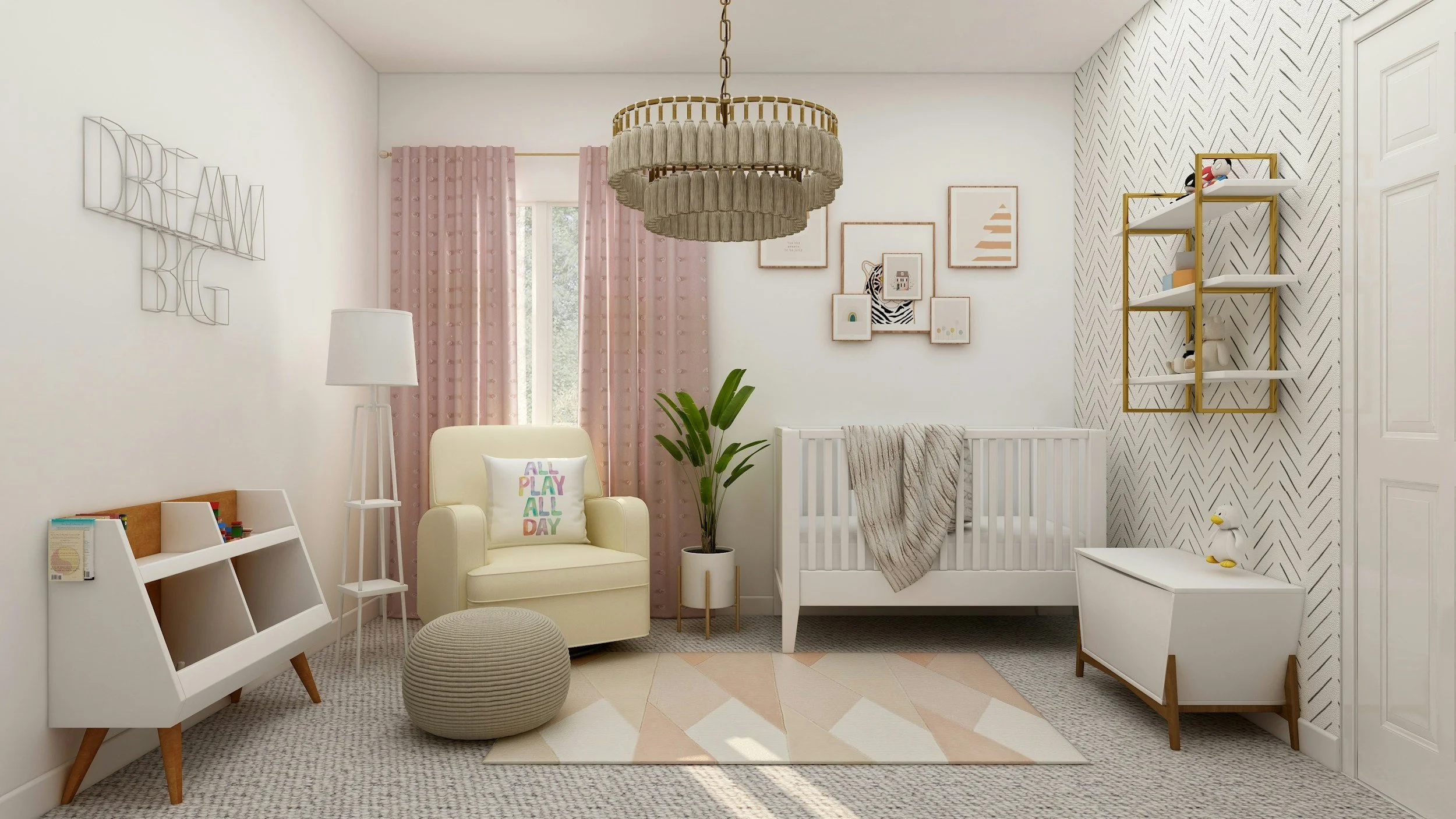
When I had my son in 2023, I was already deep into sustainability education running Zero Waste NYC, teaching workshops, making content about low-waste living. So naturally, people assumed I had the most perfectly curated, plastic-free, toxin-free nursery ever assembled.
I did not.
What I did have was a closet full of hand-me-downs, a Rebel cart full of open-box gear, and a very practical approach to sustainable baby stuff that I'm using again now with baby number two on the way.
Here's what I actually did, and what I'd do again.
Rule #1: You can buy almost ANYTHING secondhand
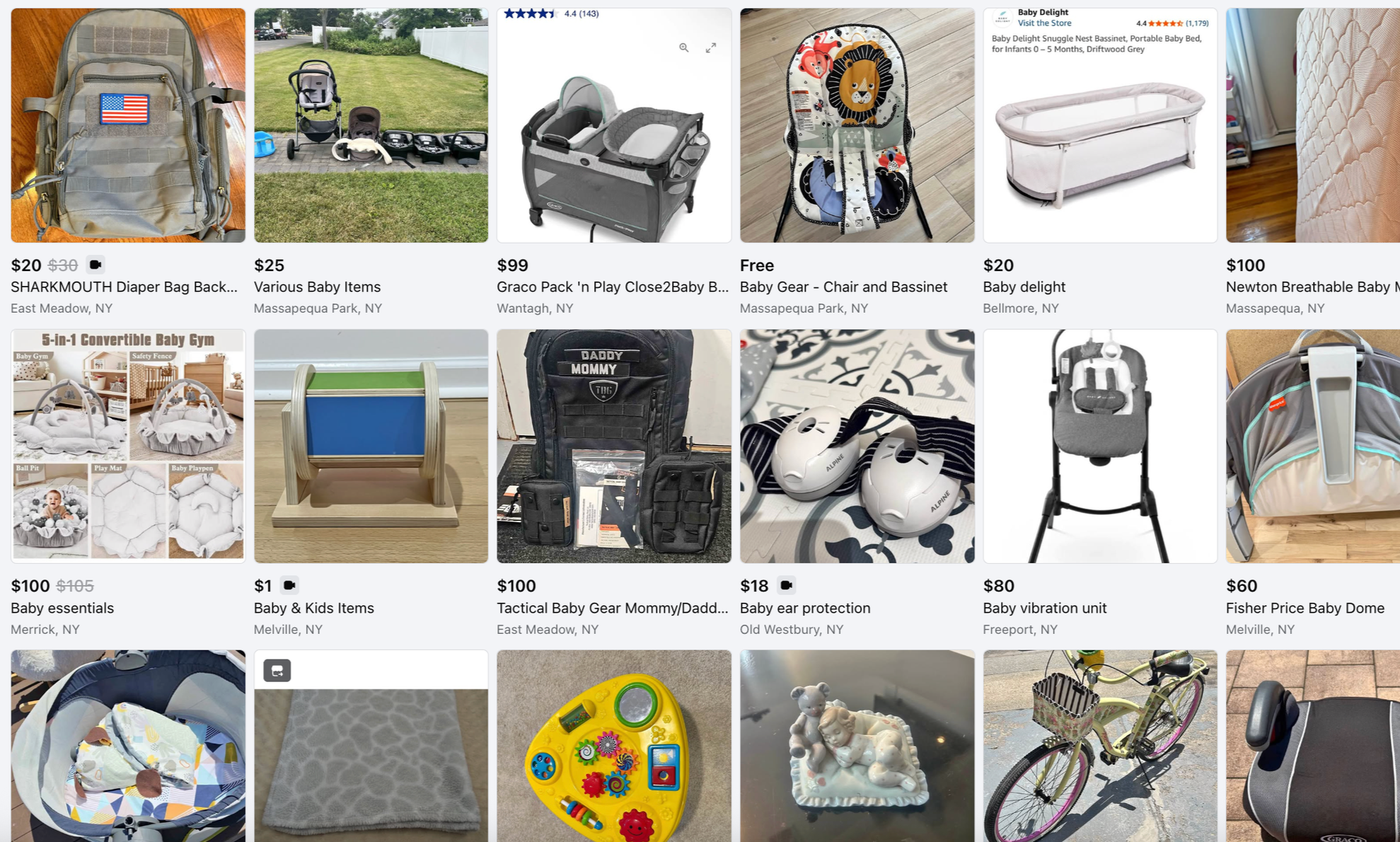
Facebook Marketplace is overflowing with baby gear!
Baby gear is one of the easiest categories to buy secondhand, and I genuinely mean that. Most big-ticket baby items like strollers, swings, bouncers and high chairs are used for only a few months before babies outgrow them. They're often in near-perfect condition and resold for a fraction of the retail price.
Before you buy anything new for a baby, check these first:
Rebel (formerly Rebelstork): This is my absolute favorite. They specialize in open-box and overstock baby gear from major brands. Think: a $400 stroller for $180, brand new in a damaged box. I shop here for gifts for other parents too. If someone has an Amazon registry, I am still getting them something from Rebel, ha!
GoodBuy Gear: Similar to Rebel, focused on secondhand and gently used baby gear. Great selection.
Facebook Marketplace: Honestly so underrated for big items. Local pickup means no shipping, and you can often negotiate. I buy (and sell) SO MUCH on FB Marketplace for my son and for our home.
Buy Nothing Groups: Your neighborhood Buy Nothing group on Facebook is a goldmine. I've seen full nursery sets given away for free.
Friends and family: Don't sleep on this one! Most parents have bags of baby clothes and gear sitting in their closets just waiting to be passed along. All you have to do is ask!
For clothing specifically, babies grow so fast that secondhand is almost always the move:
Poshmark: great for specific brands or styles
ThredUp: large online resale platform, easy to shop by size
Depop: great for unique or vintage baby finds
Local thrift stores/consignment shops: especially good if you want to shop in person
Carousel: A local Brooklyn business! Jessica curates secondhand baby and kids clothes.
I stocked nearly my entire son's wardrobe secondhand before he was born and spent a fraction of what I would have at retail. Doing the same thing again this time.
What About Safety?
I get this question a lot. The general guidance is:
Car seats: buy new or open box. We’ve always bought our car seats open box so we know they are not used, but no judgements if this is something you want brand new. Safety first, always.
Cribs: check recalls. If buying secondhand, verify the model hasn't been recalled. The CPSC website has a searchable recall database.
Everything else: secondhand is generally fine. Use your judgment and inspect items carefully before buying.
Diapers & Consumables: Where Sustainable Gets A Little Trickier
Okay, so gear is easy. Consumables are where it gets more complicated because the most eco-friendly option (cloth diapers) is also the most labor-intensive, and I want to be real with you about that.
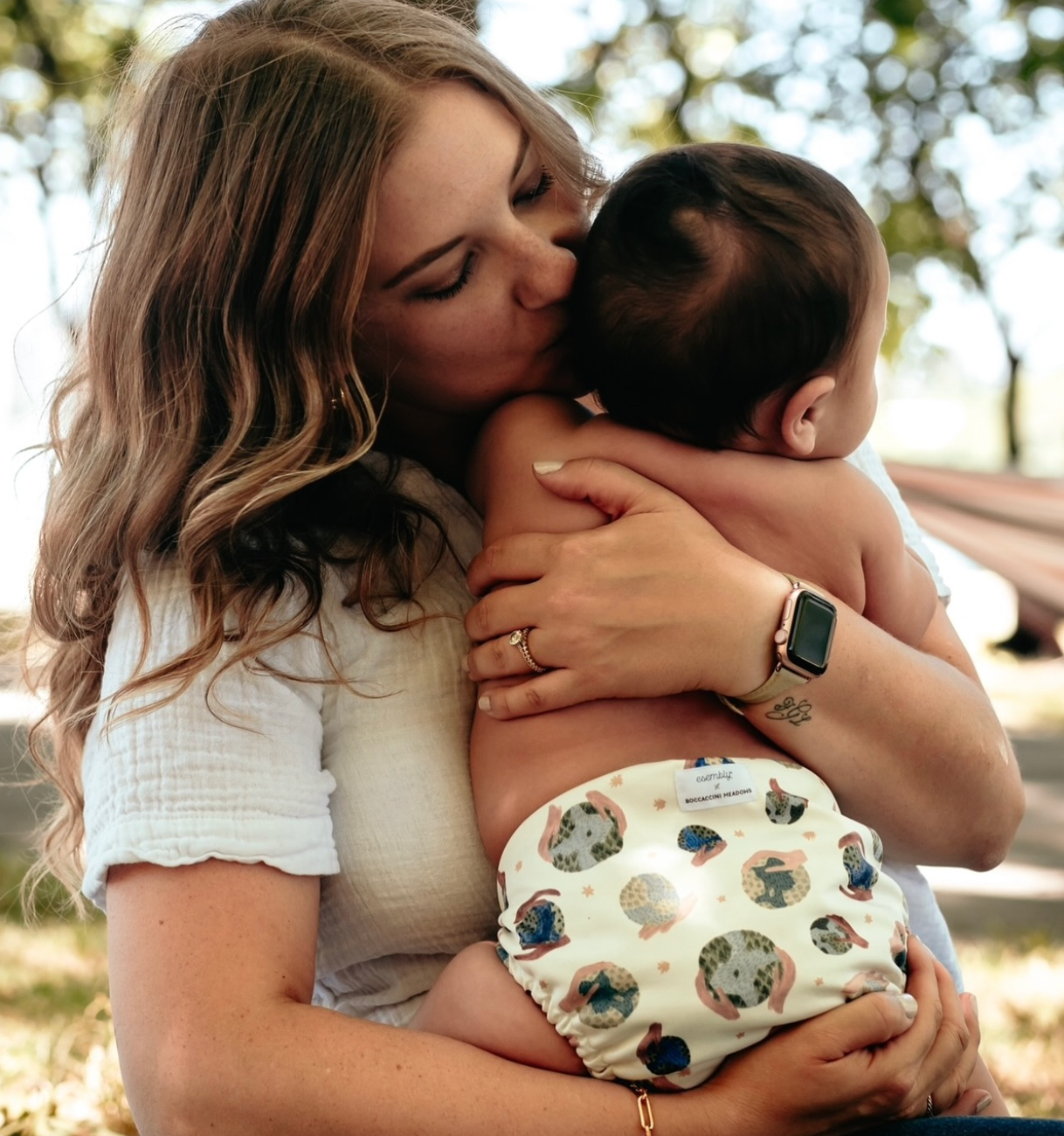
Baby boy used Diaperkind cloth diaper service + Esembly covers for 18 months!
Diapers
I used a mix with my son and plan to do the same this time. Here's my honest take:
Cloth diapers are the most sustainable option by far. Less waste, no single-use plastics, cost-effective over time. But they require a laundry routine and some learning curve. If you have the bandwidth, they're worth it. If you don't, that's okay too.
We used a local delivery service in NYC called Diaperkind. They made it incredible easy to cloth diaper and I would highly recommend them if you are in the NYC or Austin areas. Unfortunately, when we moved out to Long Island we could no longer use the service.
Disposable diapers: if you're going that route, look for options that are:
Free of chlorine bleaching, fragrances, and lotions
From brands with some level of transparency about ingredients
Brands worth looking into: Andy Pandy, Coterie, Dyper (they have a composting program but it’s pretty widely debated).
My pick: HealthyBaby. They are non-toxic, EWG VERIFIED® (the first and only diaper!), a certified B-Corp, and made in Europe at a carbon neutral facility.
Wipes
This is actually one of the easiest swaps. Reusable cloth wipes are simple, cheap, and you can make them yourself from old t-shirts or flannel. If you prefer disposable, look for fragrance-free, unbleached options. HealthyBaby has their own line of wipes as well.
Skincare & Personal Care
Babies have sensitive skin and what goes on their body matters. I like to keep it simple:
Earth Mama Organics: my go-to for baby skincare. Certified organic, really clean ingredients, and products I actually trust.
Thinkbaby for sunscreen specifically. One of the only baby sunscreens I feel good about. EWG verified and actually works.
The general rule: fewer ingredients = better for a baby's skin. You don't need a 10-step baby skincare routine.
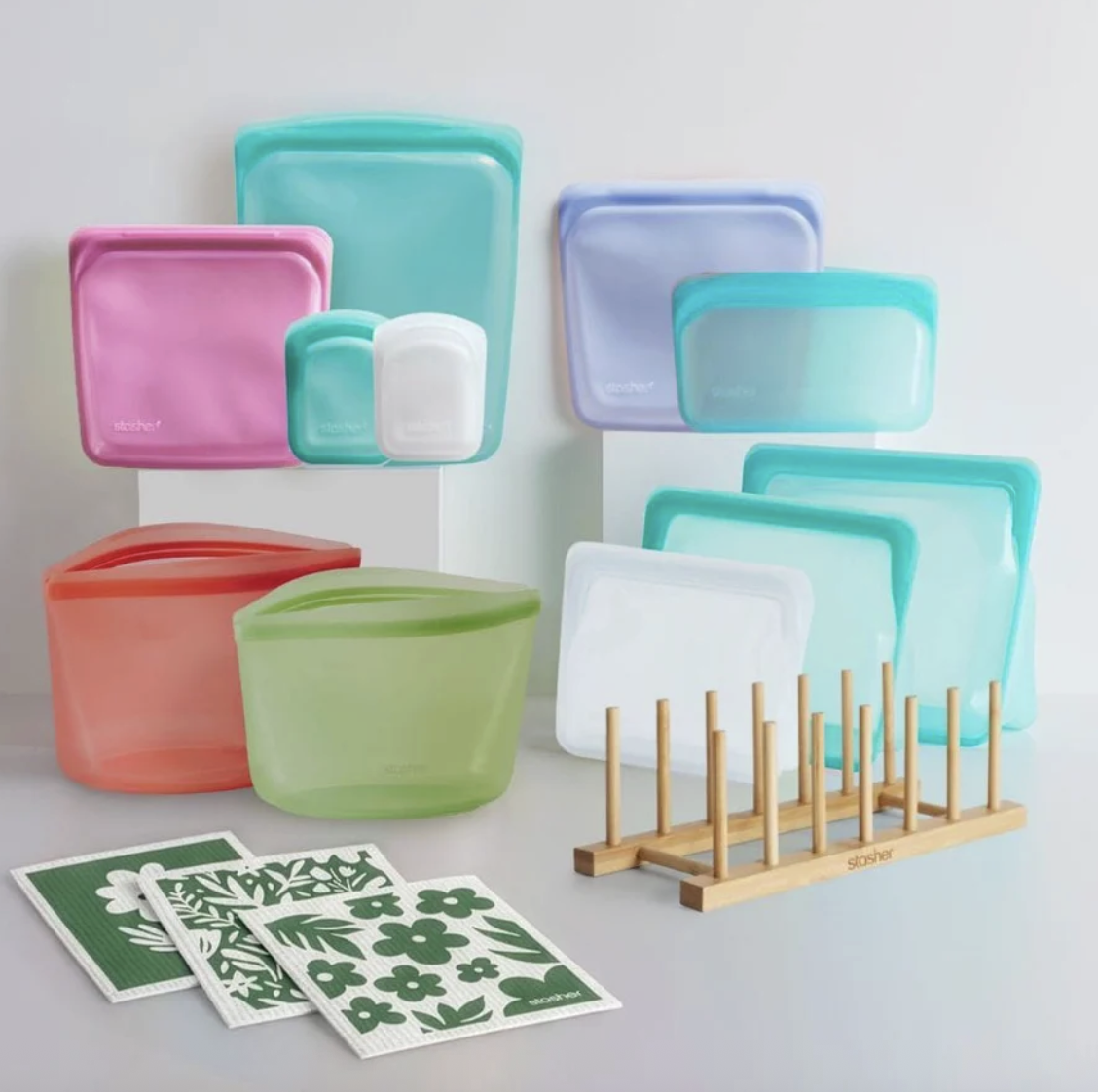
Love me some Stasher bags
Food Storage
Once you hit the solid food stage, this is where reusables really shine.
Stasher Bags: I use these constantly for my son's snacks. I label them with his name and send them to school. They last forever and replace hundreds of zip lock bags over time.
Stasher Stretch Lids: Haven't tried these yet but they're on my list!
Glass containers: for storing purées and leftovers. I got a set from Costco years ago and we still use them.
Mason jars and sauce/jam jars: honestly just as good and way cheaper.
What I'd Tell a New Parent Who Wants to be More Sustainable
Don't try to do everything perfectly. The most sustainable thing you can do for a new baby is:
Accept hand-me-downs gratefully
Shop secondhand before buying new
Skip the gadgets that sound cool but won't get used
Choose a few consumable swaps that actually fit your lifestyle
You don't need a perfectly curated nursery. You need practical, durable things that work; ideally ones that can be passed along to the next family when you're done.
That's always been my approach, and it's what I'm doing again with baby number two!
Some links in this post are affiliate links. If you purchase through them, it supports free and low-cost climate education and community programming at Community Climate Hub, at no extra cost to you.
Low-Waste Swaps That Are Actually Worth It (And What to Skip)
Buying new “eco” products is not the starting point! But sometimes, you genuinely need to replace something. And when that moment comes, it’s helpful to know which swaps are actually worth the investment and which ones are mostly greenwashing.
Here are the low-waste swaps I personally think are worth it (and a few I’d skip).
The term “zero waste” can be intimidating and feel unattainable. It can also feel like an aesthetic or a trend to uphold a specific image. That’s not how I live.
The most sustainable thing you can do is:
Use what you already have
Repair when possible
Borrow or share
Buy secondhand
Buying new “eco” products is not the starting point! But sometimes, you genuinely need to replace something. And when that moment comes, it’s helpful to know which swaps are actually worth the investment and which ones are mostly greenwashing.
Here are the low-waste swaps I personally think are worth it (and a few I’d skip).
Swaps That Are Actually Worth It
1. Secondhand Items
Clothing, baby gear, home goods, and even outdoor equipment are often used for only a short period of time before being resold or donated. Buying secondhand keeps perfectly good items in circulation and significantly reduces the environmental footprint of your purchases. In many cases, you’ll also save a lot of money!
Here are some of the platforms I recommend checking before buying new:
Secondhand Marketplaces
These platforms make it easy to buy and sell used items online.
Poshmark – great for clothing, accessories, and shoes
ThredUp – a large online resale platform for secondhand clothing
Depop – popular for vintage and unique fashion finds
Mercari – a broad resale marketplace for everything from clothing to home goods
The Real Real
Facebook Marketplace
Buy Nothing Groups
Freecycle
Your local thrift store!
Secondhand Baby & Kids Gear
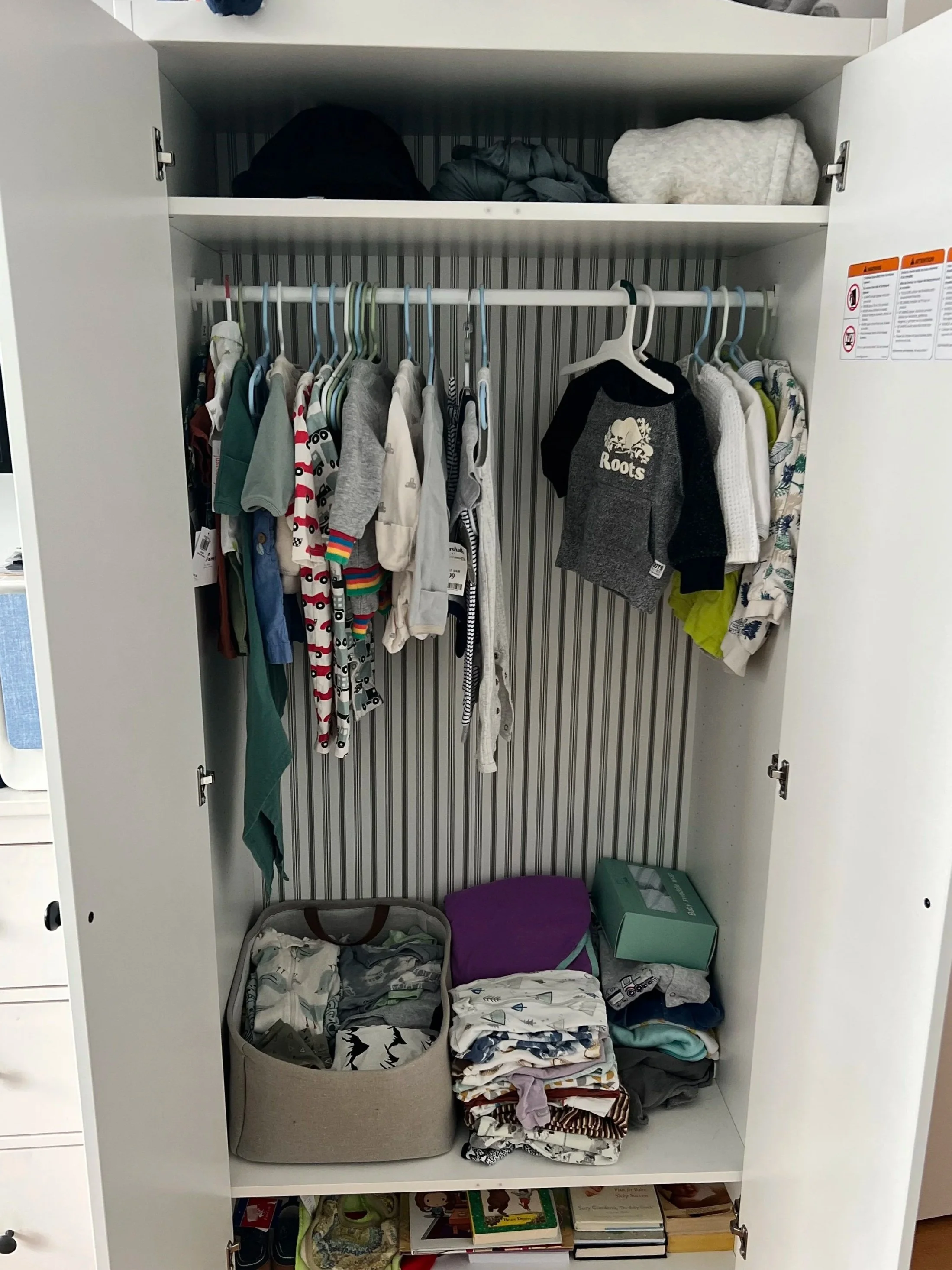
A closet full of secondhand and hand-me-down baby clothing before we welcomed our baby boy in 2023!
Baby products are some of the easiest items you can buy secondhand, since many are only needed for a few months! Platforms that specialize in baby and kids gear include:
Rebel (formally Rebelstork) – open-box and overstock baby gear. My absolute favorite site and go-to. I even shop here for gifts for other parents. I don’t care if they have an Amazon registry they are getting an open box item from me, ha!
GoodBuy Gear – secondhand baby gear marketplace, similar to Rebel.
Local parent groups, Facebook Marketplace, and neighborhood Buy Nothing groups can also be excellent places to find baby gear that families are ready to pass along. And don’t forget about your friends and family that probably have bags of clothing sitting in their closets!
Thrift stores and consignment shops are also great options if you prefer to shop in person and often carry everything from clothing to kitchenware and home goods.
2. Refillable Cleaning Systems (or DIY)
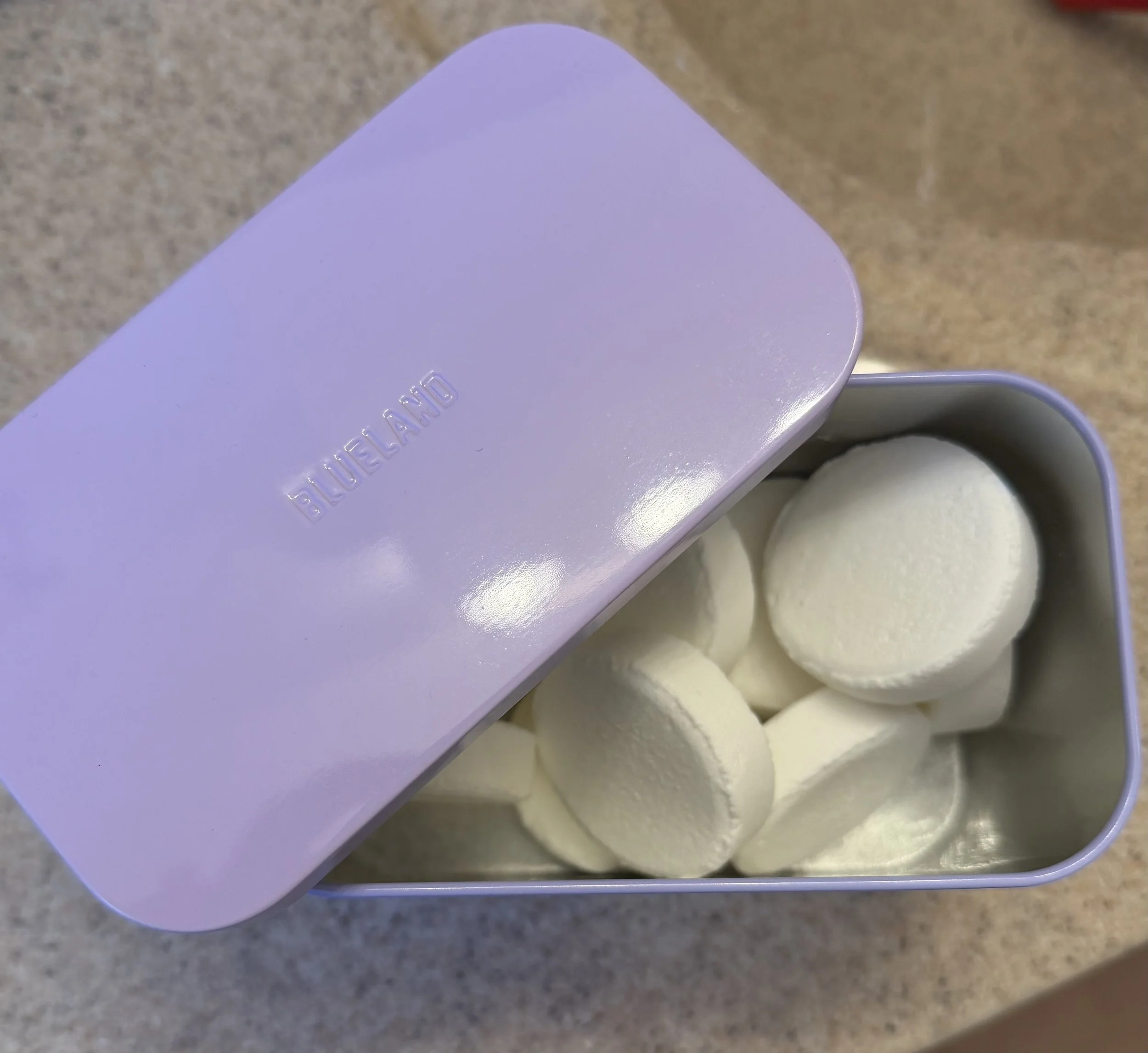
Loving the Blueland toilet bowl tablets lately! I just started using these and they work very well.
One of the first things I would switch out is cleaning products. Not only for environmental reasons, but these products also come into direct contact with surfaces in your home, so ingredients matter.
Many conventional cleaners come in single-use plastic and are mostly water. Some of them have harsh chemicals and a long list of ingredients that you can’t even read. Refillable systems reduce packaging and unknown chemicals dramatically and are easy to integrate into everyday life.
Brands I trust:
Blueland: minimal packaging, clean ingredients, refill options
Meliora Cleaning Products: small business, products made in the US, clean ingredients, refill options
Branch Basics
Anything with a reputable third party cert like Clean Label Project, EWG Verified, or a B Corp
Why they’re worth it:
Environmental benefits, less single-use packaging, better for your health!
What to do first:
Finish your current cleaners before switching.
Opt for DIY:
Another great way to control what products you are using is to make your own. There are dozens of recipes on the internet to make your own cleaning supplies that are just as effective as store bought.
3. Reusable Food Storage
Before buying: Check your cabinets. Mason jars and jars from food you’ve already used and washed out are perfect.
Now I know it’s tempting to reuse takeout containers, and these aren’t a bad idea to have on hand for when guests come over and you want to send them home with leftovers, but personally, I prefer glass containers because they last longer, are easier to clean, and I don’t have to worry about heating plastic. I purchased my glass set from Costco years ago and we are still using them.
Quick PSA: Even if you prefer plastic containers, you should never microwave them!
Some other great low waste options:
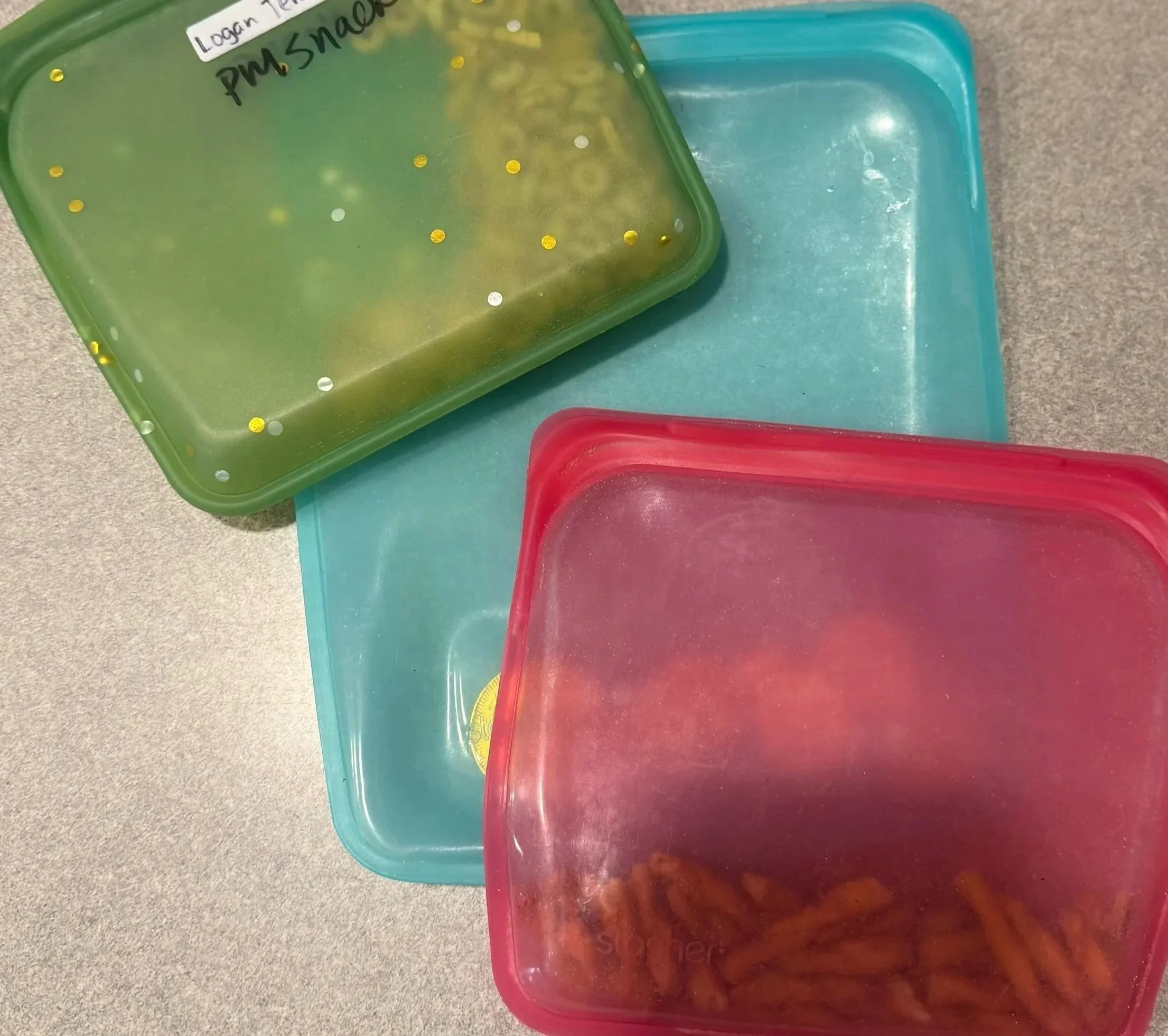
Stasher bags last forever!
Stasher Bags - I swear by these. Such a fantastic alternative to ziplock bags. I send my son’s snacks for school in these with a label on them and we use them for on the go.
Bees Wrap - great reusable option if you don’t want to use a container and just throw something on a bowl like Cling Wrap.
I’ve never tried them, but Stasher also makes these Stretch Lids - they’re definitely on my radar!
Why they’re worth it:
Environmental benefits, less single-use packaging, better for your health!
What to do first:
Don’t get rid of your plastic containers, just save those for guests as I mentioned. However, I would recommend investing in a good set of glass containers.
4. Menstrual Cups or Reusable Period Products
This one has significant long-term waste reduction and cost savings. I got really sick of spending money on single-use tampons every single month and their capacity was so limited. However, I will say, that a menstrual cup is not for everyone and there is definitely a learning curve for how to use it.
Now that I have the hang of it, I love my cup. I’ve been using the same one for over 5 years. Every month after my cycle I boil it in hot water to sanitize it and it’s good as new. I used OrganiCup for years and finally got a new one just recently from Saalt!
Here are the pros:
reusable
saves a ton of money on buying expensive tampons and pads
holds a lot more volume than a tampon
it’s a natural material that’s going into a very intimate part of my body
Honest Cons:
Like I mentioned, the learning curve is a little steep. You need to figure out how to insert it properly so it’s comfortable and used correctly
You do need to empty it and clean it. Not the most fun activity but you get used to it, in my opinion.
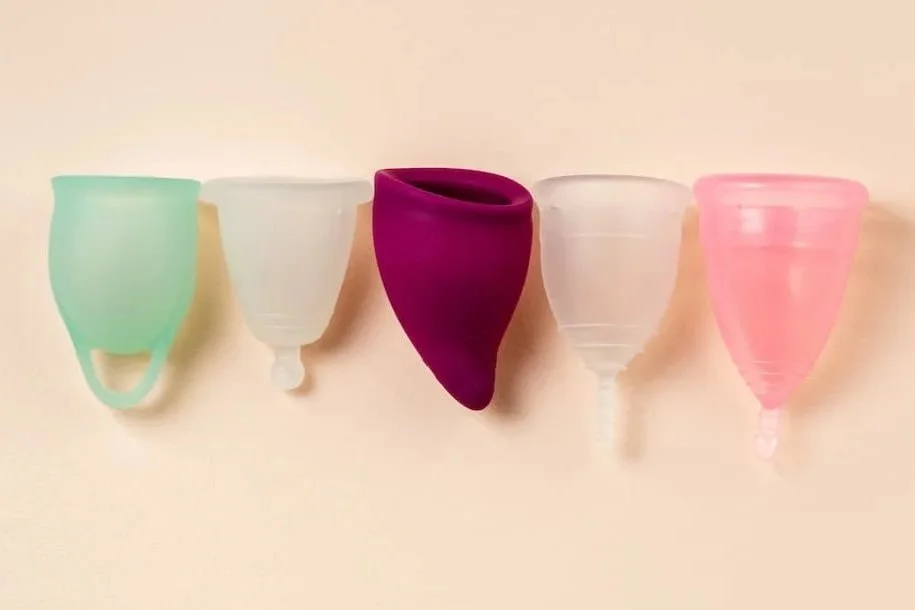
Menstrual cups come in all different shapes and sizes.
Why it’s worth it:
Environmental benefits, less single-use, better for your health, holds more volume of liquid
What to do first:
Go through your stash of tampons if you have them, then give this a try! It’s not for everyone, so don’t feel bad if it’s just not something you want to experiment with.
5. Other reusables
Some reusable products end up forgotten in a drawer. Others become part of your daily routine and replace hundreds of single-use items over time. Here are a few reusables that tend to make a real difference.
Water Bottles
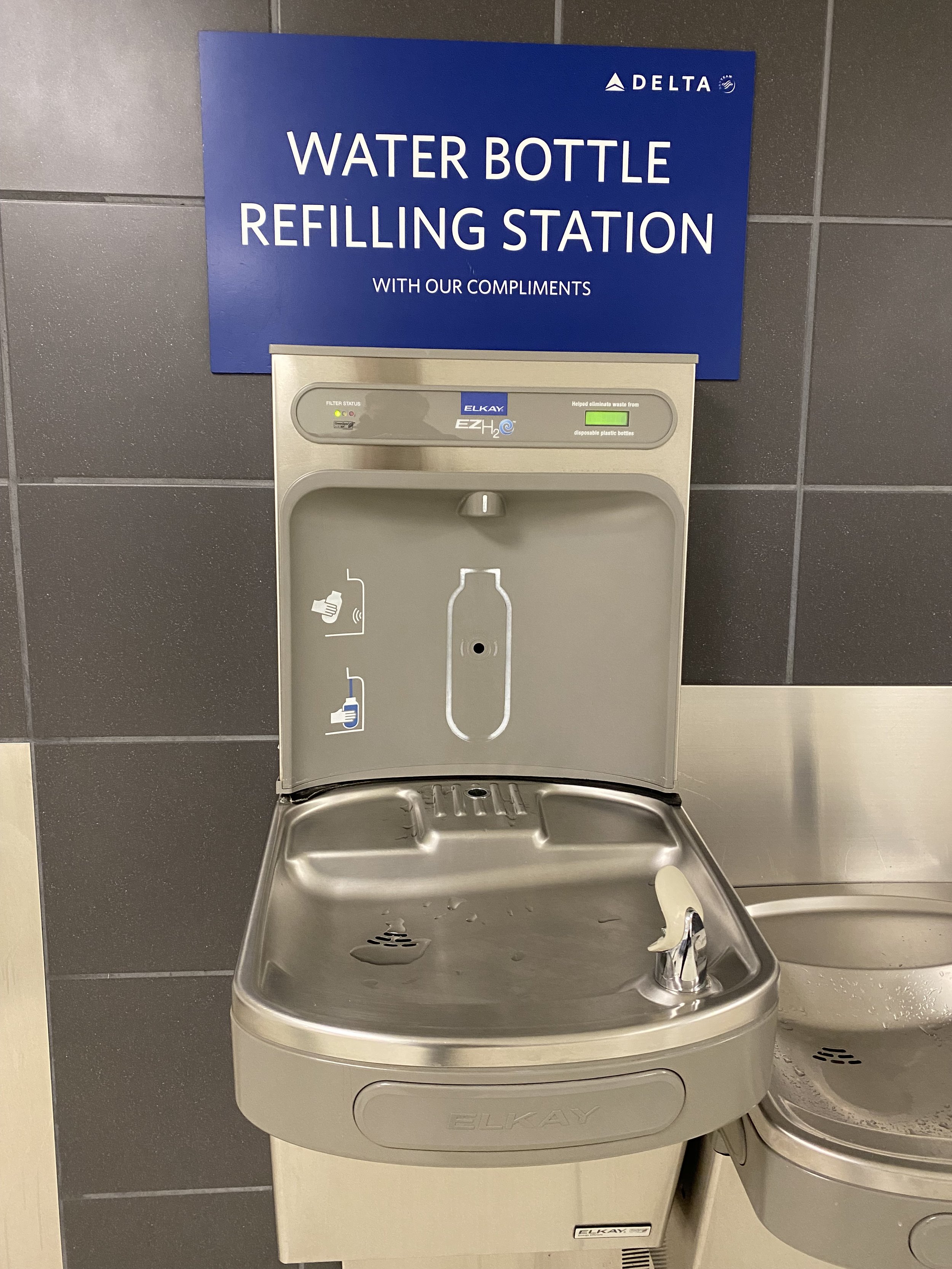
Love to see refill stations becoming the norm!
A durable water bottle is one of the easiest ways to reduce single-use plastic. Most cities (including NYC) and public places have plenty of places to refill water, and carrying a bottle quickly becomes second nature. You don’t need a collection though, just one reliable bottle that you’ll keep for years (okay fine, one for your home and one for on the go…)
Examples:
Hydro Flask- I only drink water ICE COLD, and these bottles never disappoint. They also have a trade-in program so you can properly recycle your old bottles!
Klean Kanteen - a reliable B-Corp. They’re also part of 1% for the planet.
What matters most is durability and actually remembering to bring it with you!
Reusable Coffee Cups
If you regularly buy coffee or tea on the go, a reusable cup is such an underrated swap, but it can truly replace hundreds of disposables per year. Collapsible cups are especially helpful because they’re easy to carry around when not in use.
One option I am obsessed with and use alllll the time is my Stojo collapsible cup. I also have their collapsible bowl and both are staples when I am on the go. They fold down small enough to keep in my bag which is super convenient.
Bidets (An unexpected one)
Bidets are one of those sustainability swaps people don’t always think about, but they can significantly reduce toilet paper consumption over time. There’s also a hygiene aspect that many people end up preferring once they try it!
Simple attachment bidets can be installed on most toilets without major plumbing changes. It’s not the right fit for everyone, but for households open to it, it can be a surprisingly impactful change. I personally like Tushy.
Final Thought
Low-waste living isn’t about replacing everything you own with “eco” products. In most cases, the most sustainable options are:
• Using what you already have
• Repairing items when possible
• Buying secondhand
• Choosing durable products when you do need something new
Small changes, repeated over time, add up!
Some of the links in this guide may be affiliate links. If you choose to purchase through them, it helps support free/low cost climate education and community programming.